If the sloth sin is your top result
The sloth sin leads your profile. You value rest and you do not burn yourself out chasing everything. The cost is the plans that never start and the days that drift past.
Signs of the sloth sin in everyday life
- Ten-minute tasks sit on your list for weeks.
- You start most things at the last minute.
- Free days disappear without the thing you planned.
- Staying in usually beats going out.
The upside of the sloth sin
The sloth sin often comes with calm, low drama, and a healthy refusal to rush.
What is the sloth sin?
Sloth sin, also called the sin of sloth, is small tasks that wait for weeks, and free days that drift away. It is one of the seven deadly sins, and the virtue that answers it is diligence.
- Latin name
- acedia
- Dante's terrace
- Fourth of seven
- Spenser's mount
- An ass
- Our card
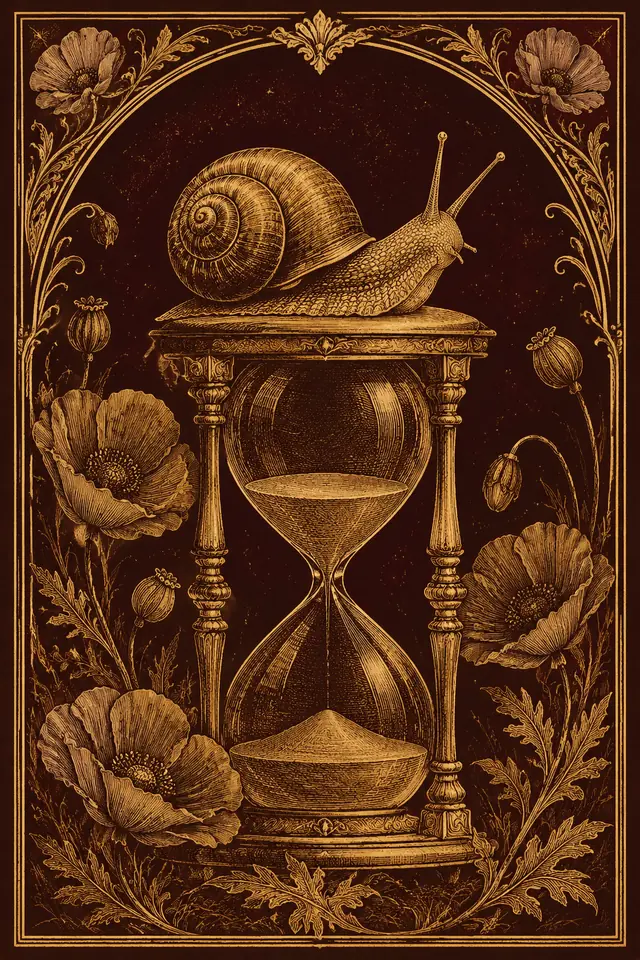
- Snail
Acedia comes from a Greek word for not caring. Early monks described it as the noonday demon, a heavy listlessness that made every task feel pointless. Gregory the Great folded it into sadness, later writers renamed it sloth, and it slowly came to mean plain laziness, which misses its point: the sloth sin is not caring enough to begin.
The sloth sin in psychology
Its modern cousin is procrastination. Piers Steel's large 2007 review of earlier studies found that people put tasks off most when the task feels unpleasant and the reward is far away, and that procrastination is tied to impulsiveness and low conscientiousness. The sloth statements in this test ask about exactly those delays.
How our tests measure the sloth sin
In the 7 deadly sins test, these five statements score the sloth sin. Each is rated from 0 to 4 points, so sloth can reach 20 points, shown as 100%.
- #2Small tasks can sit on my to-do list for weeks.
- #9I often wait until the last minute to start things.
- #17I pick the easy option even when I know a better one.
- #25A free day usually disappears without me doing what I planned.
- #33I'd rather stay in than make the effort to go out.
In the which deadly sin are you quiz, answers like these count toward the sloth sin:
- Pick a superpower.Pause time and take a nap
- You find $500 on the street with no owner in sight.Put it in a drawer and forget about it
- Be honest. Which sounds most like you?I'll do it tomorrow.
How to overcome the sloth sin
The remedy for the sloth sin is diligence. Three things to try this week:
- Work on one task from your list for just five minutes today.
- Give the thing you keep putting off a fixed time in your calendar.
- Go out once this week when you would rather stay in.
See the sloth sin next to its remedy, along with the other six pairs, in the seven deadly sins and virtues guide.
Why the sloth sin is called deadly
The word deadly translates the older term capital, from the Latin caput, head: these are the sins that sit at the head of others. Gregory folded acedia into sadness and listed the habits it gives birth to are malice, rancour, faint-heartedness, despair, sluggishness about duties and a mind that wanders toward what it should not want. That chain is what makes the sloth sin dangerous: it rarely stays alone.
The sloth sin in art and literature
The old word is acedia, a heavy indifference that early monks called the noonday demon. It means more than laziness: it is not caring enough to begin. Dante's slothful run without rest on the fourth terrace.
- Hieronymus BoschThe sloth sin appears as a man dozing by the fire while a nun appears in his dream holding out a rosary.
- Pieter Bruegel the ElderHis engraving of sloth, titled Desidia, shows Sloth asleep against a donkey, surrounded by idle, drowsy figures.
- Edmund SpenserIdleness leads the procession of sins, riding a slothful ass.
Our card for the sloth sin shows a snail resting on top of an hourglass whose sand has stopped falling.
Questions about the sloth sin
What does it mean if my top deadly sin is sloth?
That you put off things that matter, especially when they feel unpleasant or far from a reward. The upside is calm and a healthy refusal to rush. The remedy for the sloth sin is diligence: small, steady starts.
Is the sloth sin just laziness?
Not originally. The old word acedia meant not caring, a kind of spiritual listlessness. Laziness is one way it shows up.
What is the opposite of the sloth sin?
Diligence answers the sloth sin: steady, caring effort that starts small and keeps going.
The other six sins
Want to see how strong the sloth sin is in you? Take the 7 deadly sins test. It takes about five minutes and scores all seven.
Sources
- Steel, P. (2007). The nature of procrastination: A meta-analytic and theoretical review. Psychological Bulletin.
- Dante Alighieri, Purgatorio; Edmund Spenser, The Faerie Queene, Book I, Canto IV.
- Oxford Medieval Studies: The Seven Deadly Sins and Their Antidotes